
Moodboarding is one of the most immersive and inspiring parts of defining your brand’s visual identity. Whether you’re developing a new brand style or shaping the aesthetic for a specific project, product, or service, a moodboard serves as a powerful guide for refining your creative direction.
Beyond offering focus and clarity, moodboards ensure that everyone involved in your project shares a unified vision. They are invaluable when collaborating with designers, photographers, illustrators, and copywriters – acting as a visual reference to maintain consistency throughout the creative process.
Why moodboarding matters
A strong moodboard does more than just collect beautiful images—it clarifies emotions, defines aesthetics, and sets a creative tone.
By curating the right mix of imagery, textures, typography, and colours, you create a tangible expression of your brand identity. Let’s explore how to craft a moodboard that brings your brand to life.
Step 1: Start with inspiration
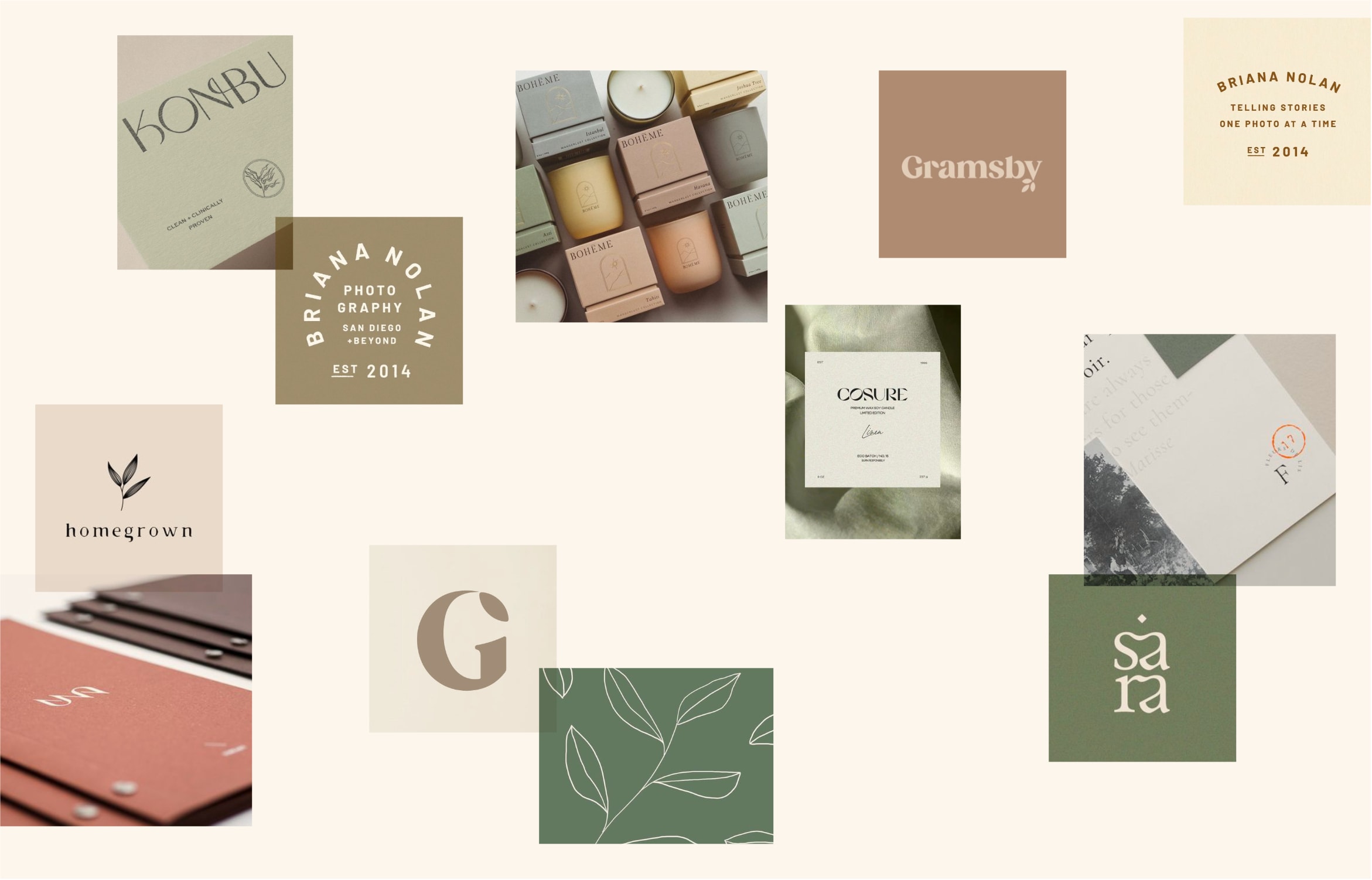
Before assembling your moodboard, immerse yourself in inspiration.
- What elements capture your brand’s energy? Think about art, nature and photography.
- What emotions do you want to evoke? Refined, playful, bold?
- What textures and colours align with your vision? Muted, organic, vibrant?
Action: Gather your visuals
Create a Pinterest board or a folder of saved images. Collect everything that speaks to your brand, from fonts and patterns to textures and compositions.
💡 Tip: Pinterest’s “More Ideas” feature can help surface additional visuals that align with your selections.
Step 2: Define your theme
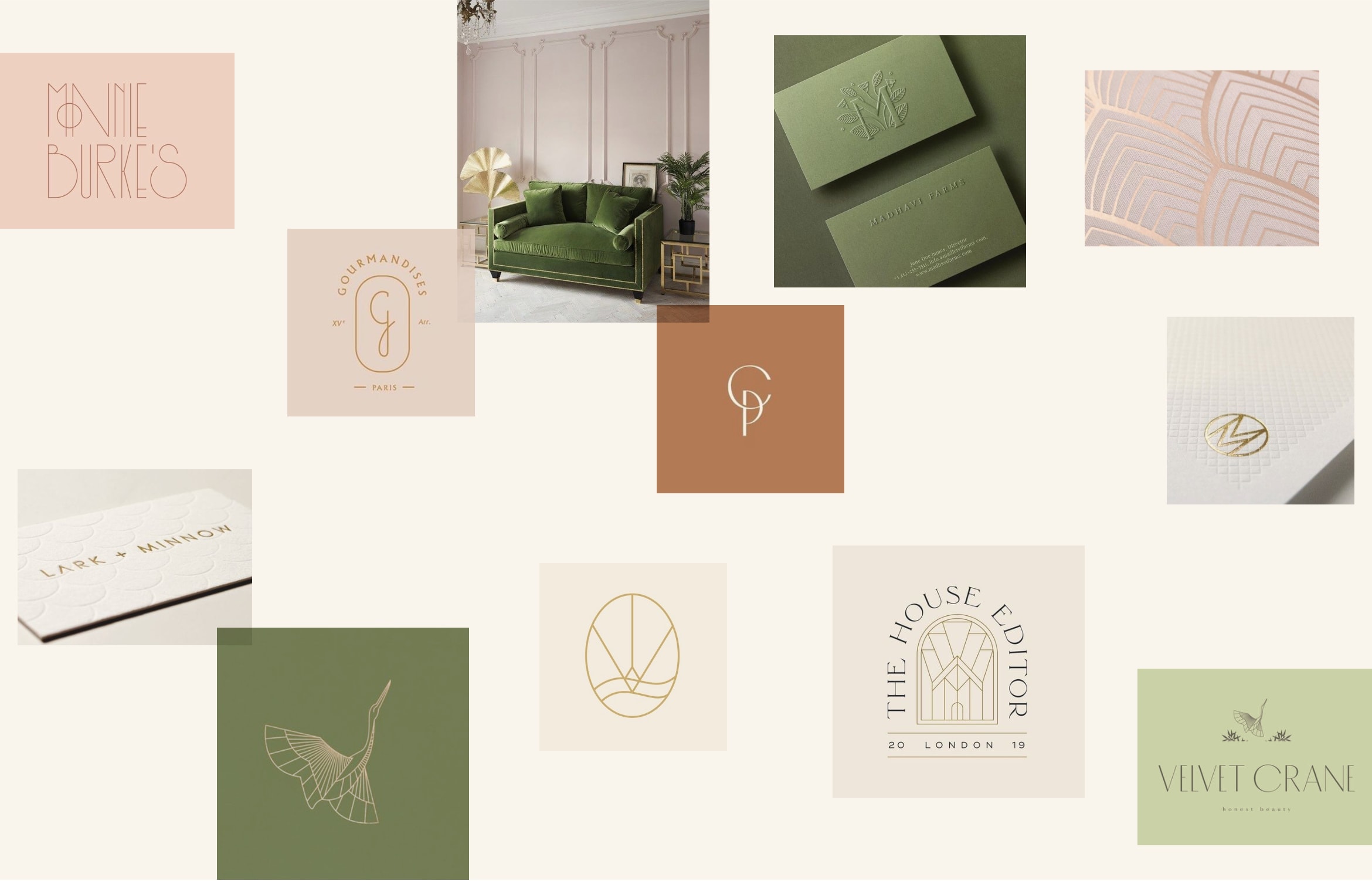
A great moodboard tells a story. Here in this post, I’ve shared some real-world examples of moodboards that helped shape brand identities:
Studio Gently
A thoughtful, nature-inspired brand identity for a photographer whose work documents candid moments, drawing inspiration from earthy textures and muted natural tones.
🌿 Mood: Calm, grounding, natural
🎨 Colours: Muted greens, warm neutrals, autumnal hues
🔹 Typography: Classic serif paired with sans serif
🖼 Textures: Flowing ink, soft materials, natural details
Studio Nikogwendo
A sleek and sophisticated brand inspired by Art Deco elegance and geometric precision.
✨ Mood: Bold, luxurious, refined
🎨 Colours: Pink, gold, emerald
🔹 Typography: Modern sans-serif, clean sans-serif
🖼 Textures: Glossy metallics, structured patterns, angular forms
Saorsa Psychology
A brand rooted in freedom, balance, and emotional wellbeing, blending a bold yet calm approach, inspired by the outdoors, particularly the Isle of Skye.
✨ Mood: Reflective, poetic, empowering
🎨 Colours: Forest greens, earthy taupes, sandy beiges
🔹 Typography: Elegant serif with clean sans-serif contrast
🖼 Textures: Smooth stone, natural beauty, botanical details
💡 Tip: Assign a one-word theme to your moodboard to maintain focus and guide your creative direction!

Step 3: Curate + refine
Now, it’s time to edit your collection to focus on the strongest elements.
- Keep it focused: Aim for 6-12 key visuals that reflect your brand style.
- Balance colours, textures + type: Make sure elements work together harmoniously.
- Sense-check for alignment: Does your moodboard reflect the emotions you want your brand to evoke?
Action: Assemble your moodboard
- Use Canva, Adobe Express, Photoshop, or Affinity to arrange your visuals on a single page.
- Check out my list of recommended tools at the end of this post for resources on colours, fonts, and images.
- Refer to the below moodboard template and the following guidance to help you get started:
- Select a core image that best represents your brand’s aesthetic
- Include patterns or textures that convey the brand’s energy
- Choose 3-5 key colours that reflect your brand’s emotional tone
- Add a typography sample (for logo or content)
- Include photographic elements or textures that bring depth to the style
- Feature icons, symbols, or a logo reference to add character
💡 Tip: Avoid overcrowding your board – less is more when it comes to finding clarity!
Step 4: Gather feedback + adjust
Your moodboard is a living document – it can evolve as your brand grows.
- Invite feedback from peers or collaborators
- Test its effectiveness – does it communicate your vision?
- Refine as needed until it feels good for you.
Tools for crafting your moodboard
- Pinterest – A great place to curate inspiration and find related visuals
- Coolors – Experiment with colour palettes that align with your brand
- MyFonts, Google Fonts & Creative Market – Find typography that reflects your brand’s personality
- Unsplash & Pexels – Discover high-quality images for your board
- Canva & Adobe Express – Easily arrange your images into a moodboard
Moodboards are more than just pretty pictures – they’re powerful tools for shaping brand identity. They provide:
- Clarity in your brand’s visual language
- Consistency across all branding elements
- Inspiration to guide creative decisions
So, take a moment to brew a cuppa, put on your favourite playlist, and start curating your brand’s visual story.
📌 For more inspiration, check out this creating a moodboard post from my archive. I’d love to see what you create! Share your collage with me directly or tag me on Instagram.


